3D产品展示是聚客利器——在寸土寸金的零售空间中,三维视觉效果能瞬间抓住 消费者注意力。但传统3D展示方案依赖笨重的箱体式结构,占用了大量珍贵的 地面空间——而很多品牌恰好没有这份奢侈。
Three-dimensional showcases are a proven way to capture attention in high-traffic retail spaces. But traditional boxy installations take up valuable floor space that many brands simply don’t have — creating a tension between impact and practicality.
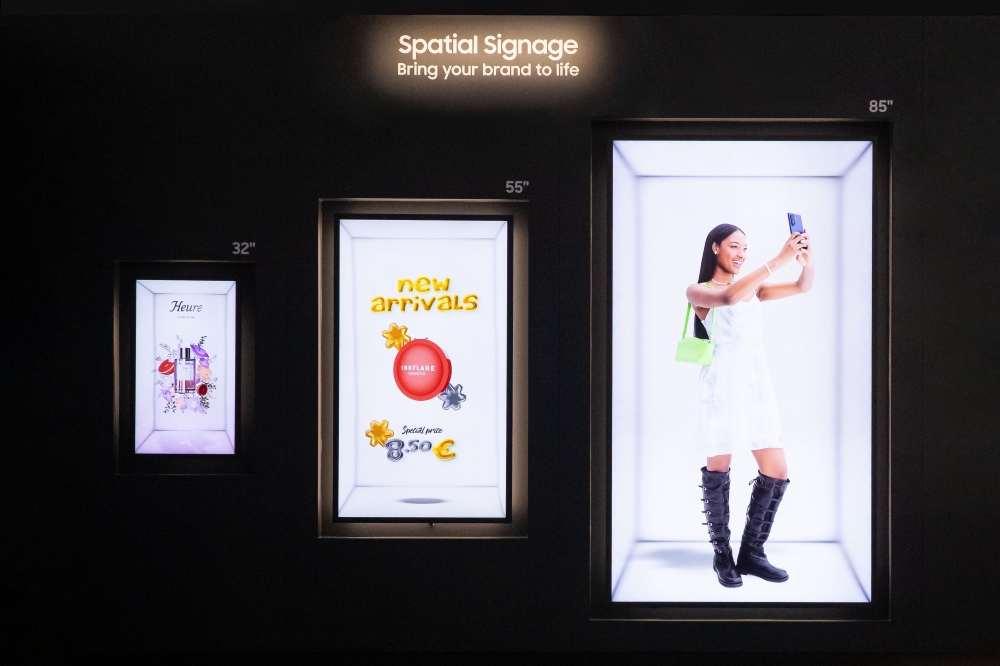
三星空间标牌(Spatial Signage)解决了这个矛盾。它仅约5厘米(2英寸) 厚的机身内,嵌入了三星专利的3D Plate技术——一种定制光学层, 通过弯曲光线直接在面板内产生深度感知。没有大箱子、没有额外支架, 一块面板本身就是完整的3D展示系统。
Samsung Spatial Signage solves this. Its slim 2-inch profile houses Samsung’s patented 3D Plate technology — a custom optical layer that bends light and generates depth perception directly within the panel. No boxes, no bulky stands — the panel itself is the complete 3D system.
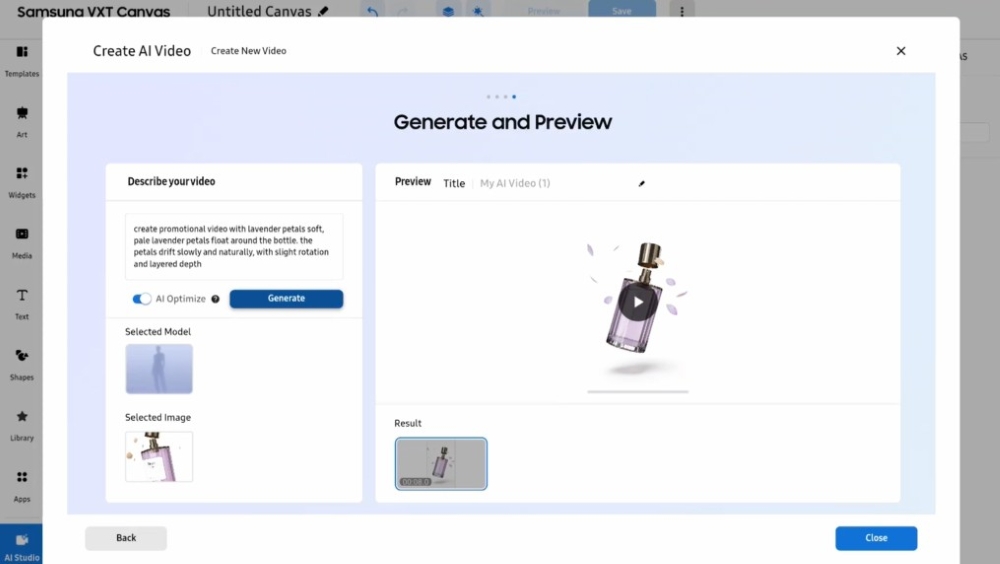
空间标牌的内容生产层面,是三星VXT(Visual eXperience Transformation) 平台中的AI Studio应用。品牌方的内容团队无需任何视频制作经验: 上传一张产品图,输入一段文字描述,AI即生成适配空间标牌的3D优化视频内容。
On the content side, Samsung’s VXT platform includes AI Studio — an app that requires zero video production expertise. Upload one product image, enter a text description, and AI generates signage-ready video optimized for Spatial Signage.
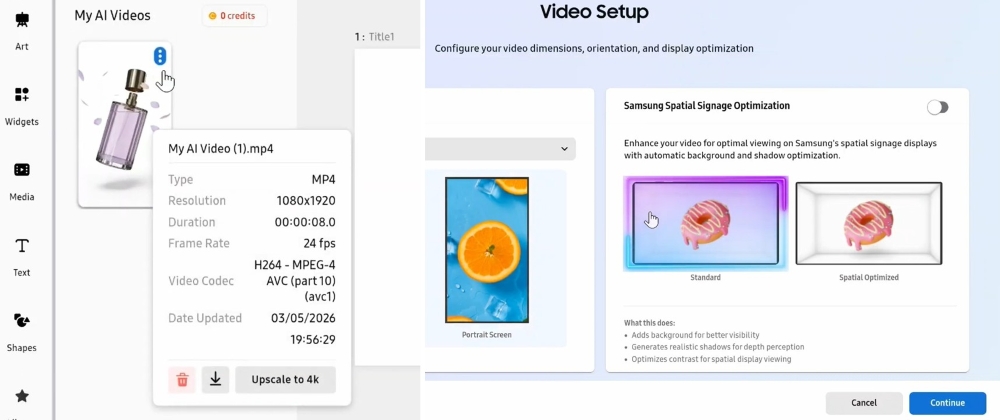
AI Studio支持4K UHD 60fps向上采样,不仅输出常规数字标牌内容, 还能通过可选功能针对空间标牌进行专属3D深度优化——自动调整 阴影层次、前景与背景的距离感知,让每一帧在85寸大屏上都呈现强烈立体感。
AI Studio supports 4K UHD 60fps upscaling and offers an optional Spatial Signage optimization — automatically refining shadow layers, depth perception between foreground and background, ensuring every frame delivers striking dimensionality on 85-inch panels.
对于已经部署了传统数字标牌的零售商而言,空间标牌的关键价值之一是 与VXT平台的完全兼容。品牌可以在同一个管理后台中, 同时控制传统平面标牌和空间标牌的内容投放——无需增加新的运维系统, 无需培养专门的3D内容团队。
For retailers already using traditional digital signage, Spatial Signage’s full compatibility with VXT is a key advantage. Brands can manage both conventional and Spatial Signage content from the same admin dashboard — no extra systems, no dedicated 3D content team required.
📋 从传统标牌到空间标牌 · 过渡路线图
目前85英寸型号已上市,32英寸和55英寸将在年内推出。多尺寸布局 意味着品牌可以根据不同门店的物理空间条件灵活选型:大型旗舰店用85寸 打造视觉焦点,小型门店用32或55寸在货架端实现局部3D亮点。
Currently available in 85 inches, with 32-inch and 55-inch formats to follow later this year. The multi-size roadmap means brands can match the display to each store’s spatial conditions: 85-inch for flagship anchor walls, 32-inch or 55-inch for shelf-level 3D highlights in smaller footprints.
这篇文章透露的信息,比表面看到的更深。空间标牌真正的革命性不在于 免眼镜3D本身——许多公司都在尝试——而在于三星为它构建了 一条完整的低门槛价值链。
This article reveals more than meets the eye. The true revolution isn’t glasses-free 3D itself — many companies are trying that — but the complete low-barrier value chain Samsung has built around it.
拆解来看:硬件端2英寸超薄解决空间顾虑 → VXT平台解决管理碎片化 → AI Studio解决内容生产瓶颈 → 一键”Spatial Signage优化”解决3D调校门槛 → 多尺寸布局解决不同门店适用性。这五个环节环环相扣, 把3D商业显示的准入门槛从”需要外包制作公司”降低到了 “上传一张产品图即可”。
Break it down: 2-inch slim hardware addresses spatial concerns → VXT platform unifies fragmented management → AI Studio eliminates content production bottlenecks → one-click optimization removes 3D calibration barriers → multi-size layout covers diverse store formats. These five links form a chain that drops the entry barrier for 3D commercial displays from “hire a production agency” to “upload one product image.”
联想到三星空间标牌系列的四篇报道——从爱宝乐园的落地案例,到技术内幕访谈, 到美国上市的宏观叙事,再到这篇实操指南——可以清晰地看到一个商业策略的闭环: 先用极致场景证明价值,再拆解技术展现壁垒,然后宣布市场可用性, 最后提供低门槛工具让品牌”自己动手”。这已经不是卖显示屏的逻辑, 这是构建一个”空间显示即服务”的生态。
Reading across all four Samsung Spatial Signage articles — from the Everland case study, to the R&D deep-dive, to the U.S. launch announcement, and now this practical guide — a clear business strategy emerges: prove value with iconic deployments, reveal technical moats, announce market availability, then hand brands low-barrier tools to “do it themselves.” This is no longer selling displays — this is building a “spatial display-as-a-service” ecosystem.